
4 C's of career growth for young professionals, by young professionals
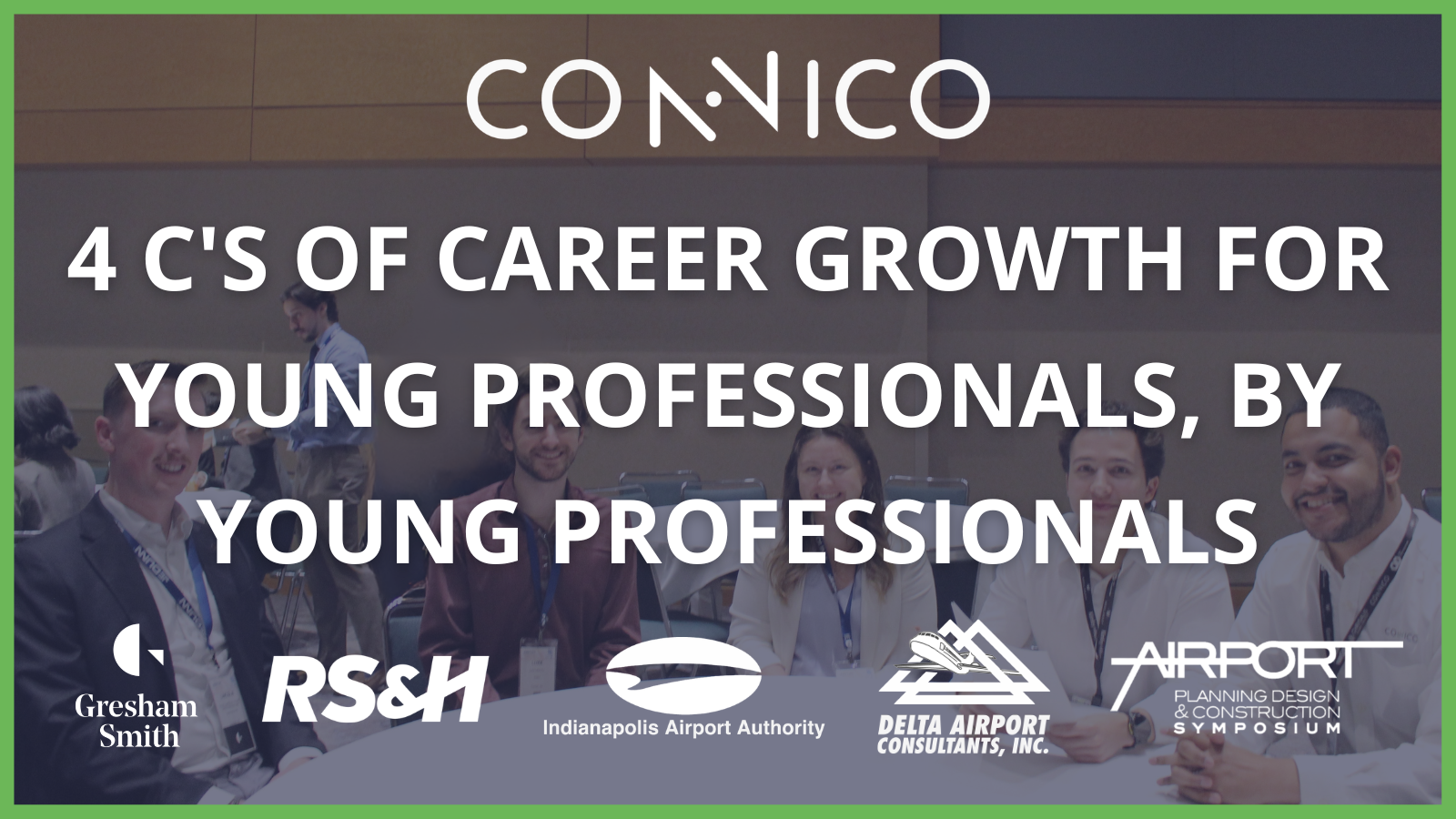
No two career paths look exactly alike, but the learning curve often does. For young professionals, knowing when to ask questions, when to take initiative, and how to set healthy boundaries are skills worth building.
Those topics took center stage during a conversation at the 2026 AAAE/ACC Planning, Design & Construction Symposium, where panelists and young professionals from across the aviation industry shared honest reflections on what they've learned early in their careers. Their conversation revealed four common themes: Curiosity, Commitment, Character, and Capacity. These serve as a foundation for long-term professional growth.
Curiosity: The foundation of credibility
Early in your career, success isn't about having all the answers; it's about knowing how to find them. Asking thoughtful questions, being resourceful, and embracing the learning process build credibility.
"One of the biggest misconceptions early in your career is that asking questions makes people question your abilities. In reality, asking thoughtful questions is one of the fastest ways to learn. The sooner you seek clarity, the more efficiently you can move forward, and over time, that's what builds confidence and credibility."
Fabian Guevara, Connico
"There's also a balance between asking questions and developing resourcefulness. When you hit a roadblock, your first instinct shouldn't always be to ask someone else to solve it. Connico talks a lot about putting in a good-faith effort first. That struggle is where real learning happens. The challenge is knowing when you've reached the point where asking for help is the smartest next step."
Evan Yablonsky, Connico
"The type of question you ask matters just as much as asking one in the first place. Instead of asking, 'What's the answer?' I’ve learned it's more beneficial to ask, 'How do I find the answer?' The learning process, instead of just getting the solution, helped me become more independent."
Lincoln Loeffler, Gresham Smith
"Asking thoughtful follow-up questions also shows that you're engaged. People can see that you're listening and invested in the work. Another question worth asking is how long a task I've never done before should actually take. Setting those expectations early helps you learn without putting unnecessary pressure on yourself.”
Kaitlyn Zych, RS&H
Commitment: Be intentional with every "yes"
Not every opportunity deserves a yes. Client requests, a stretch assignment, or extra responsibility all require understanding your workload, considering your team's capacity, and aligning decisions with long-term goals.
"Sometimes the opportunities you really want are built on work that doesn't seem exciting today. Saying yes to a project that's one step closer to your long-term goal, even if it isn't glamorous, can open doors you wouldn't have otherwise. For example, taking meeting minutes. It might not be anyone's favorite job, but you're in the room. You're learning, you're listening, and you're preparing yourself for larger responsibilities later."
Luke Letica, RS&H
"Connico places emphasis on exceptional client service, so it can feel easy to say yes when a client asks for a quick turnaround. But every commitment has a ripple effect. Saying yes without considering your team's workload can create unnecessary pressure and make it harder to deliver your best work."
Ramon Valdez, Connico
"Be cognizant of agreeing to take extra work when it might impact other team members. It's different when the yes only challenges you and taking on stretch assignments can help accelerate growth, but if your yes creates extra work for everyone else, it's worth slowing down and evaluating whether it's the right decision."
Fabian Guevara, Connico
Character: How trust and leadership are built
Character is demonstrated before you have a leadership title. It's reflected in how you respond under pressure, support your teammates, take initiative, and communicate honestly.
"People notice how you handle pressure. If you can respond calmly and professionally, especially amidst stress, that builds credibility just as much as completing the work itself."
Jordan Bastian, Delta Airport Consultants
"The best leaders I've worked with are the point guards of the company. They usually aren’t the loudest people in the room – they focus on listening first to create opportunities for other people to grow, build confidence, and succeed."
Evan Yablonsky, Connico
"Initiative can look like making someone else's job easier. Taking smaller tasks off your manager's plate or helping onboard a new employee demonstrates that you're thinking beyond your own responsibilities."
Kaitlyn Zych, RS&H
Capacity: Protecting your ability to perform
Your ability to do great work depends on protecting the energy it takes to do it. Setting boundaries, communicating your limits, and preventing burnout allow you to consistently show up at your best.
"Many of the pressures we experience come from the expectations we place on ourselves just as much as the expectations others place on us. That's why clear communication matters. Being transparent about your capacity isn't unprofessional; it's respectful. I always say that clear communication is kind communication. That clarity helps everyone work together more effectively."
Tracy Guerrero, Indianapolis Airport Authority
"Setting boundaries and saying no go hand in hand. I've learned that if my workload is already full, taking on more doesn't actually help anyone. Protecting my time to take care of myself allows me to do my best work and be dependable when I do commit to something."
Fabian Guevara, Connico
"Burnout was normalized throughout my time in architecture school, but I made a personal rule that I would never pull an all-nighter. I'd wake up earlier if I needed to, but protecting my health ultimately helped me produce better work and set me up well to set healthy boundaries in my career now."
Lincoln Loeffler, Gresham Smith
"Burnout has many layers, being individual, cultural, and structural. Many of us grew up watching previous generations equate long hours with commitment, so those expectations became ingrained in our systems. Thankfully, workplaces are beginning to recognize that sustainable performance – not constant exhaustion – is what leads to long-term success."
Tracy Guerrero, Indianapolis Airport Authority
Interested in reading more about Connico’s Symposium experience? Read Business Development Specialist Andrew Skidmore’s takeaways here, or more from our young professionals here.